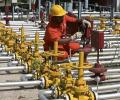
The government on Thursday hiked by 62 per cent the price of natural gas that is used to produce electricity, make fertilisers and turned into CNG to use as fuel in automobiles and cooking gas for household kitchens. This is the first increase in rates since April 2019 and comes on back of firming benchmark international prices but does not reflect the spurt in spot or current price of liquefied natural gas (LNG) witnessed during the last couple of weeks. The oil ministry's Petroleum Planning and Analysis Cell (PPAC) said the rates paid for gas produced from fields given to state-owned Oil and Natural Gas Corporation (ONGC) and Oil India Ltd (OIL) will be $2.90 per million British thermal unit for the six-month period beginning April 1.
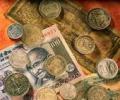
OIL, which had paid a total dividend of 190 per cent in 2011-12, in January declared an interim dividend of 110 per cent for the current fiscal.

Divestment Ministry on Friday said it has received in-principle clearance from Petroleum Ministry and is going ahead with the sale of government equity in Oil India Ltd (OIL).
The two government upstream companies, along with GAIL, make good a third of the losses made by government oil marketing companies.
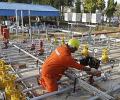
Petroleum Minister Dharmendra Pradhan on Tuesday put state-owned ONGC and OIL on notice saying oil and gas reserves they hold need to be monetised through joint ventures with domain experts or the government will take them away and auction them. Speaking at BNEF Summit, he said state-owned firms cannot indefinitely sit on resources when the nation is a net importer of oil and gas. Despite India bidding out acreages to private and other companies since the 1990s, Oil and Natural Gas Corporation (ONGC) and Oil India Ltd (OIL) hold a "sizeable number of acreage for years," he said.
Seeks deferred payments for domestic purchases, dollar window.
State-run gas utility GAIL India on Monday said it should be exempted from payment of fuel subsidies as it does not get any upside from rise in crude oil or natural gas price.
ONGC went for a stock split in preparation for a follow-on issue that is expected to hit the market in the second quarter of 2011-12.

India has acquired a Russian oil company and bought equity stake in an oil field project in Venezuela through consortium route, the Rajya Sabha was informed on Tuesday.

'During the course of these two years, as new people have joined, we have no mental picture to associate with them and hence, have little connection with them.'

Although he denied any wrongdoing, Sibal was forced to revert to Oil India on October 31 as group general manager -- a rank which he held prior to becoming the director general of directorate general of Hydrocarbons.

State-owned Indian Oil Corp and Oil India Ltd on Tuesday confirmed making an 'approach' to take over the Middle-East focussed oil firm Gulfsands Petroleum Plc for an undisclosed cash amount.

The Indian firms will develop the Carabobo-1 block in Venezuela's Orinoco Belt with Spain's Repsol YPF SA and Malaysia's Petroliam Nasional Bdh, ONGC said.
The subsidy burden of upstream oil companies, Oil and Natural Gas Corporation and Oil India Ltd, have risen 42 per cent in a single quarter.
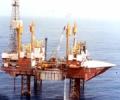
ONGC Videsh Ltd, overseas investment arm of the state-run explorer, teamed up with Oil India Ltd and Turkish Petroleum Corporation to bid for the Halfaya oilfield in Iraq's second post-war bid round on Friday.
Russia's Gazprom or Rosneft may also join ONGC Videsh, the overseas arm of the state-run explorer, in Iraq's second post-war bid round on December 11-12, industry sources said.

The government plans to more than double the price of natural gas produced by Oil and Natural Gas Corp (ONGC) to $4.20 per mmBtu, in a move that will help the state-run firm break even in gas business.

The timing, however, would be decided in consultation with the government and after the approval of the company's board. An 11 per cent fresh equity would be sold in the IPO while the government would divest 10 per cent of its stake at the IPO price.

Sibal rejoined OIL on October 31 and immediately applied for early retirement, government sources said. In 2004, he had gone as directorate general of Hydrocarbons on lien from where he was reverted to his parent company OIL.
The gas price revision will add to the bottomline of the two public sector companies -- Oil and Natural Gas Corporation and Oil India Ltd -- and will also yield additional revenue for the central and state governments.

In a significant development, the government may allow state gas utility GAIL India to charge a marketing margin on sale of APM or subsidised natural gas.

State-run Oil India Ltd, which got listed on the bourses on Wednesday, is looking at acquisition of assets or companies in Australia, South-East Asia, Africa, Russia and Latin America.

ONGC Videsh Ltd and its partners Indian Oil Corporation and Oil India Ltd have dropped plans to develop an oil field in Iran after the discovery was found to be commercially unviable.

The oil explorer's IPO received bids for 80.93 crore (809.3 million) shares against 2.64 crore (26.4 million) on offer as on 1600 hrs. Investment banking sources said that the portion reserved for qualified institutional buyers got subscribed 54 times, while the non-institutional and retail investors bid 9.77 times and 1.14 times respectively.
The Union petroleum ministry has proposed a 44 per cent increase in prices of natural gas sold under the administered price mechanism by state-owned Oil & Natural Gas Corporation and Oil India Ltd.

ONGC Videsh Ltd, the overseas arm of the state explorer, Reliance, IOC and Oil India Ltd had in April this year come together to consider jointly bidding for a 40 per cent stake in a field in the vast Orinoco heavy crude oil belt. To make up for the loss of Reliance, OVL has opened talks with global energy firms and is even willing to take a smaller role in case a major company joins the consortium.
Iran had in September 2008 approved the commerciality of the discovery in the Farsi block. The discovery, which was subsequently named Farzad gas field, may hold inplace reserves of up to 21.68 trillion cubic feet (Tcf), of which recoverable reserves may be 12.8 Tcf. The Indian firm want to liquefy the gas and ship it to India in the form of liquefied natural gas.

In the third acquisition in 10 months, state-owned Oil and Natural Gas Corp (ONGC) and Oil India Ltd (OIL) will buy Videocon Industries' 10 per cent stake in a giant Mozambique gas field for about $2.5 billion.

A proposal for extension from the Oil Ministry is pending clearance from Central Vigilance Commission and the Central Bureau of Investigation, which is probing allegations that he favoured Mukesh Ambani-led RIL in lieu of personal benefits.
The Indian firms want to liquefy the gas and ship it to India in the form of liquefied natural gas. OVL, which holds 40 per cent interest and is the operator of the block, has also submitted a feasibility report for the one billion barrel oil discovery it made in 2006.
State-owned oil producers are planning to upgrade security arrangements protecting their oil installations in Assam following a series of bomb blasts on Thursday that left many dead and injured.
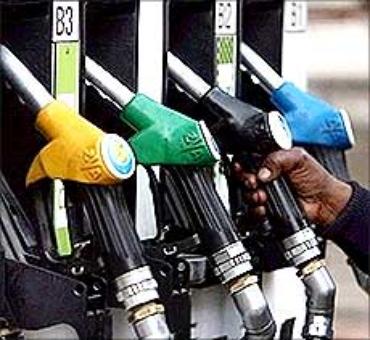
Oil India Ltd, the second state-run firm to hit the market with an offering of equity shares this year, may price its IPO that opens on September 7 at Rs 1,000-1,100 a share.

The government on Wednesday more than doubled the price of natural gas produced by state-owned Oil and Natural Gas Corp (ONGC) and Oil India Ltd to $4.20 per mmBtu, at par with the rate at which Reliance sells its gas.
OIL, which produces 3.5 million tonnes a year of oil, will offer 2.64 crore equity shares to public in the IPO, while the government will simultaneously sell 10 per cent of its stake in the company to state refiners.
OIL, which produces 3.5 million tonnes a year of oil, will offer 2.64 crore equity shares to public in the IPO, while the government will simultaneously sell 10 per cent of its stake in the company to state refiners.
OIL, which produces 3.5 million tonnes a year of oil, will offer 2.64 crore equity shares to public in the IPO, while the government will simultaneously sell 10 per cent of its stake in the company to state refiners. An 11 per cent fresh equity would be sold in the IPO while the government would divest 10 per cent of its stake at the IPO price.

Oil ministry had previously proposed a 30 per cent hike in price of gas produced by Oil and Natural Gas Corporation and Oil India Ltd to $2.3 per mmBtu but finance ministry wants these rates to be brought on par with RIL, sources in the know of the development said.
The Oil and Natural Gas Corporation will pay Rs 852 crore (Rs 8.52 billion) for subsidising petrol and diesel during January-March quarter but state gas utility GAIL India has been spared from the subsidy burden.

IOC has been forced to shut down its Digboi refinery in Assam and is operating Guwahati unit at minimal throughput, while OIL has been forced to shut LPG production and its crude oil production has dropped by 15-20%. Sources said the agitation has blocked the movement of tankers and trucks, which are mostly used to supply petrol, diesel and LPG from the refineries to different parts of the North East.
